
Northfield City Directory Collections
Northfield's historical directory holdings live in three main places. The Pye Room at Northfield Public Library holds much of the printed material. The Rice County Historical Society keeps its own Polk runs. Carleton hosts digitized collections online. The local shelf spans Polk directories, Northfield and Faribault phone books, yearbooks, clippings, maps, and census support. No source proves an annual or complete run. Reach for the volume nearest your event. Then check the books before and after any gap. The listings here separate a printed directory from a newspaper index, a phone book, and an institutional handbook. Each one answers a different question about Northfield's past residents.
| Collection | Years | Where Held | Access |
|---|---|---|---|
| Northfield Polk directories | 1880-1993, listed runs with gaps | Rice County Historical Society; some Library material | On-site research; use name and street sequences |
| Northfield phone books | Listed early volumes, plus combined runs 1962-2003 | RCHS and Northfield Public Library | On-site; check the actual shelf record |
| Northfield memo-directory and handbook | 1928 and 1929 | Carleton Rice County ContentDM collection | Digitized online; student-focused |
| Northfield News and indexes | Digital about 1879-1925; later local access | Library, Carleton, MNHS, and History Center | Digital index, microfilm, bound copies, and local files |
The Rice County ContentDM collection offers digitized Northfield handbooks.
Its 1928 and 1929 memo-directories are genuine Northfield examples. They document a college community, though, rather than every household in town.
Northfield Directory Shelf
Most of the local-history material sits in or beside the Pye Room, on the second floor of Northfield Public Library. The holdings include local, family, and church histories. Carleton and St. Olaf histories are there too, along with Northfield High School yearbooks, people and building files, atlases and plats, and maps from 1855, 1869, and 1968. Ask the staff about the index drawers. The catalog alone will not show everything. A collection survey describes roughly 40 drawers of card indexes plus a 27-drawer alphabetical newspaper index, so a staff question pays off whenever a surname stays hidden in a public search. The Northfield Public Library local-history collection describes the materials behind this directory shelf, which supports street directory and resident lookup work across the city's past residents.
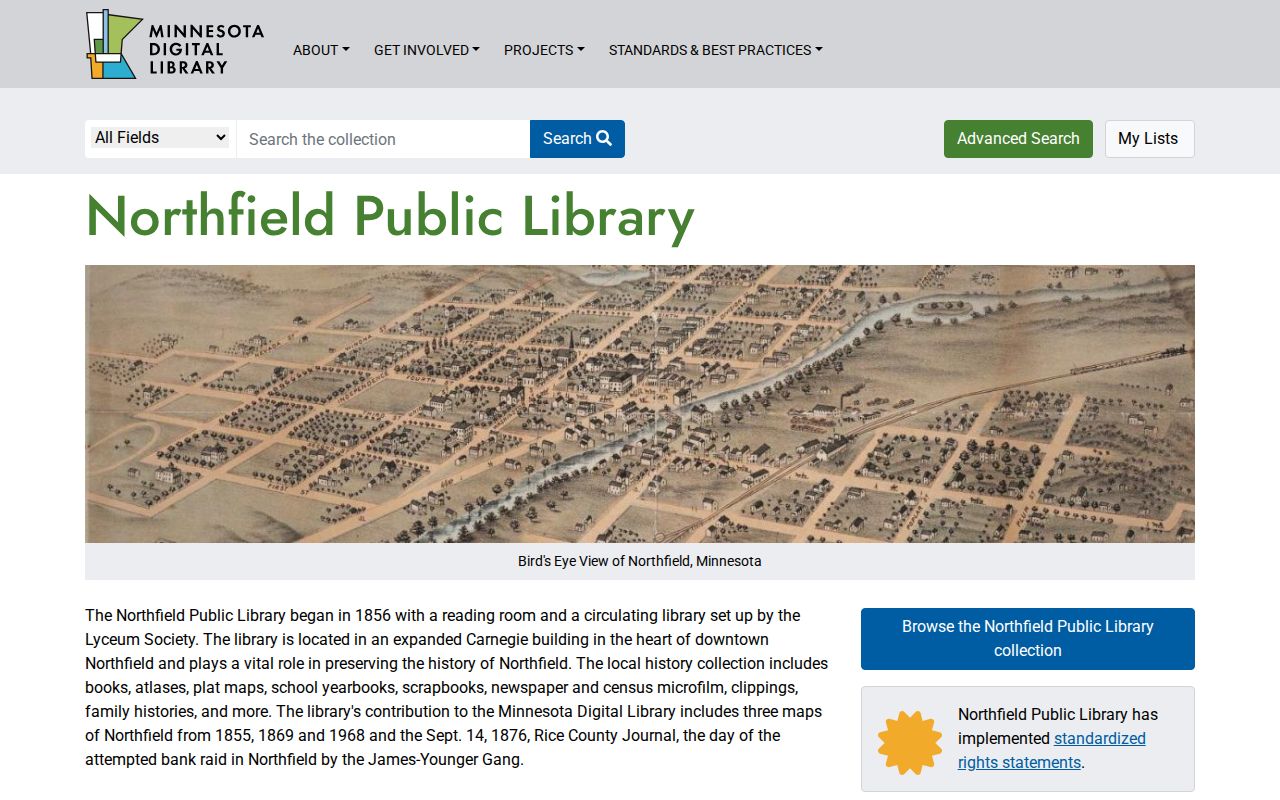
The Northfield library also offers more than books. Its access includes Northfield-area census microfilm, census index cards, and in-library Ancestry Library Edition and HeritageQuest, all useful checks after a directory hit.
Northfield Polk Directory Years
The Rice County Historical Society holds the most specific Polk list for this search. Its years include 1880; 1888 and 1889; 1893, 1895, and 1899; 1903, 1907, and 1909; 1911/12, 1913/14, 1915/16, and 1918. The list also covers 1921, 1926, and 1929; 1936/37 and 1939/40; and selected postwar volumes through 1993. The later stretch contains grouped 1972-77 and 1980-89 runs. That grouping does not prove a volume for every year. Treat a missing name carefully. Check an adjacent available Polk year before concluding that anyone left Northfield. Gaps in this city directory record usually reflect missing volumes, not missing residents. The Rice County Historical Society research library provides the holdings route. It covers these Northfield directory years.
The society's obituary scrapbooks run from 1936 to the present. They can show whether a disappearance from a printed listing reflects a death, a move, or simply an unlisted year in the street directory.
Northfield Phone Directory Gaps
Northfield phone books add address and contact clues, but their coverage demands care. The historical-society source literally prints "1933 to 19637, 1939, 1944," which looks like a typographical error. Verify it against the physical volume or shelf list. Do not quietly treat it as a year range. The same source lists combined Faribault, Northfield, Owatonna, and Waseca volumes in several runs from 1962 through 2003, plus further Faribault, Northfield, and Red Wing volumes for 1997, 1998, and 2003. A rural resident directory for 1980/81 adds separate Northfield-area and Rice County context. Phone and Polk volumes both give address-to-name leads. An address association in a book, however, does not establish ownership or a current residence for any past residents it names.
Northfield Directory Handbook Fields
The digitized 1929 memo-directory shows why the word "directory" needs context. It is a student-focused source. It is not a complete residential roll. Its entries can tie a person to a Northfield home address. They can also record campus information. Read the original page, keep the spelling intact, and treat the publication date as part of the evidence. The handbook confirms neither an owner mark nor a standard abbreviation key for every local directory. So weight it accordingly.
| Name | Identity as printed in the handbook |
|---|---|
| Class | Student affiliation and time context |
| College Address | Campus location, not necessarily a household address |
| Phone No. | Telephone field as published |
| Locker No. and PO Box | Institutional and mail locators |
| Home Address | Address lead to compare with other dated sources |
These Northfield handbook fields earn their keep. They separate a campus location, a mail locator, and a home-address lead. Compare them with a Northfield Polk or phone volume before merging two similar names into one person.
Reading Northfield City Directory Entries
Identify the publication, year, and section first. Copy a Northfield city directory entry only after that groundwork. A name section and an address section serve different purposes. When an address looks unfamiliar, compare the street spelling against Northfield maps and plats. Publishers invent their own abbreviations. Photograph or note the key from the same volume before interpreting a shortened entry. A street-order section, where it exists, is the strongest tool for following one address through time, but each particular book must be checked for its presence and format.
- Criss-cross directory
- A directory section arranged by street or address that can provide address-to-name clues.
- Householder index
- An index that groups a household under the person the publisher selected, which may omit other people at that address.
- Abbreviation key
- The publisher’s explanation of shortened words and marks, usually found in the volume’s front matter.
Record the limit with the citation. When a Northfield volume lacks a key or an address section, say so plainly. A careful transcription preserves what the source states without adding meaning its publisher never defined, which keeps every resident lookup honest.
Northfield Directory News Context
A directory entry gives you a name and a street. It rarely explains why someone moved, married, or changed jobs. Northfield News fills that gap. The paper began as the Dundas News on November 4, 1876. The first Northfield News followed on November 1, 1879. The digital collection's index covers more than 30,000 names. Digitized pages stop around 1925 because of copyright. For later decades, the library's microfilm and bound copies, the History Center's bound issues, and local index cards carry the Northfield trail forward. The Northfield Library's newspaper cards run through 1998. Its online index reaches 2008, and each Northfield index entry points to an original article rather than replacing it.
Northfield Directory College Context
College and school records add a personal layer to a Northfield directory search. The Pye Room holds Carleton and St. Olaf histories. It also keeps Northfield High School yearbooks. A yearbook can confirm a name, class year, portrait, or activity. An institutional directory shows the setting. That setting explains an old Northfield address. A college listing is a sample, though, not a full city roster, so pair it with the original directory, a newspaper notice, or a census schedule before assigning anyone to a household. This approach suits classmates. It also documents a Northfield family timeline without stretching a single address line past what its source supports.
Northfield Directory Maps and Files
Old house numbers and street names confuse things. The Pye Room maps help. The maps span 1855, 1869, and 1968. Plat and map indexes, plus local people and building files, can bridge an old address to a modern one. A 1910 Sanborn fire-insurance map sits in the Library Director's Office. Ask staff before assuming a complete run. They can confirm access and any extra sheets. For downtown buildings, the 1982 Northfield Downtown Guidebook draws on city files and public-library material. It points toward a building-history lead, but the source files and the recorded land trail still settle the question.
Northfield City Directory Timeline
Dated Northfield milestones help frame the surviving volumes. None of them establishes a first city-directory year or a final printed run for the county. No authoritative source states a complete first publication date or last issue either. Keep the edges visible.
- 1876: Dundas News begins, adding a local name and event source.
- 1879: The first Northfield News appears.
- 1880: The earliest Polk directory year verified on the RCHS holdings list.
- 1928-1929: Student-focused Northfield memo-directories survive in digitized form.
- 1950: The latest generally public federal census schedule provides a household checkpoint.
Publication gaps are part of the Northfield record. The next available volume or a newspaper index usually bridges them better than guesswork.
Trace Northfield City Directory Households
Treat a Northfield city directory as a dated snapshot. Then test each address and name against another record type. The nearest open federal census is 1950 under the 72-year release rule. It confirms a household at a decennial point. It cannot fill the later years. Newspaper notices, obituaries, maps, and the recorded property trail close those intervals, and the historical Northfield volumes still take a direct shelf or collection search.
- Locate the name in the closest available directory volume and copy the spelling, address, and year.
- Check an earlier and a later available Northfield volume for a move, a changed initial, or a different street form.
- Use an address or criss-cross section only after confirming the book includes one.
- Pair the address with the nearest available census schedule, then compare the household details.
- Use newspaper indexes and obituary scrapbooks to find an article date or family connection for further checking.
People vanish from a Northfield directory for many reasons. A move, a death, a name variation, a skipped volume, or the publisher's own selection rules can all explain it. Trust the dated Northfield originals, not one missing line.